

Treatment of implant disease (peri-implantitis)
Diagnosing and treating an infection around a dental implant.
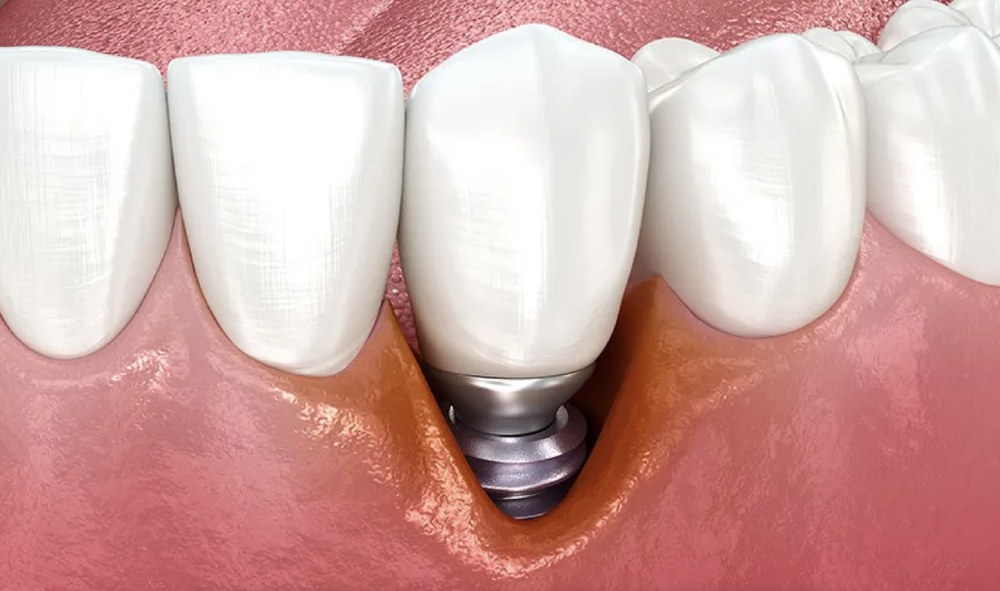
In some cases, loosening can occur even around an implant. These are infections that can lead to the loss of implants, and therefore of the dental prostheses they support.
Factors that increase the risk of these infections
- Untreated systemic conditions: diabetes, inflammatory diseases, tobacco use
- Oral diseases: gingivitis, periodontal disease
- Limited amount of bone and gum tissue around the implant: thin bone, thin gum
These conditions, which are rarely painful, are often caused by a lack of bone or gum tissue at the time the implants were placed, by poor implant positioning by the surgeon, or by the presence of gum inflammation around the teeth (untreated periodontal disease).
Loosening of the gum and bone around implants progresses much faster than around natural teeth.
Treating these infections requires a surgical procedure under local anaesthesia, to disinfect the rough, threaded surface of the implants. This disinfection can be done using instruments to smooth the implant surface and remove the infected layer (implantoplasty), or through galvanic cleaning / air polishing, with or without bone and gum reconstruction.
Treatment options
There are 3 treatment options for these conditions, depending on the severity of the damage:
Cleaning and smoothing the implant (implantoplasty)
When the implant surface is heavily contaminated, it can be disinfected by smoothing it with special burs. This removes the infected layer. This technique, called implantoplasty, can lead to slight gum recession — which is why it is often combined with a gum graft to protect the area, make brushing easier and prevent the infection from returning.
Surface disinfection (galvanic treatment)
In some cases, the implant can be disinfected more gently, without damaging it, using a process called galvanic cleaning. This treatment then allows the damaged bone around the implant to be rebuilt using a bone graft.
Implant removal
If the infection is too advanced or the implant can no longer be saved, it may need to be removed. Bone reconstruction is then often essential before a new implant can be placed.
A question about this treatment?
Book an appointment, and we will answer all your questions during the consultation.